
Last updated November 15, 2026
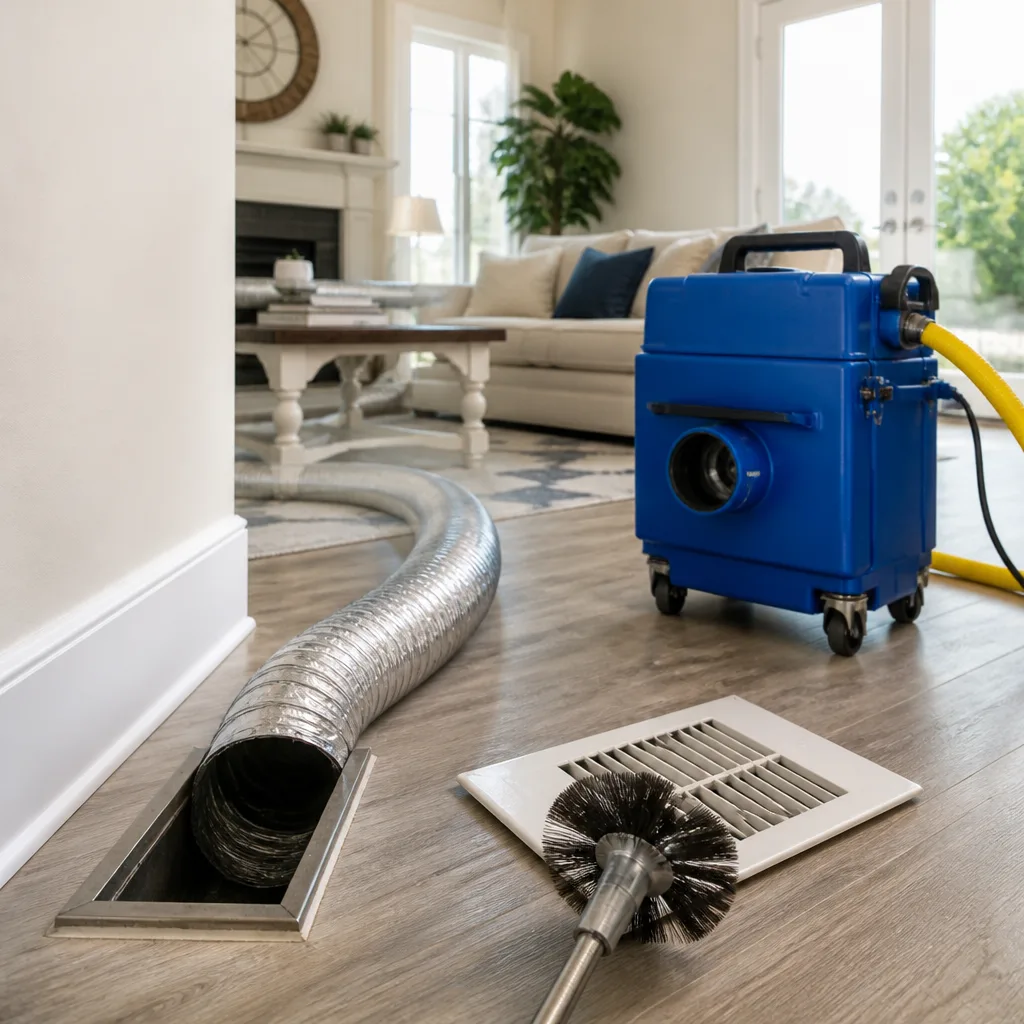 Whole-home duct cleaning
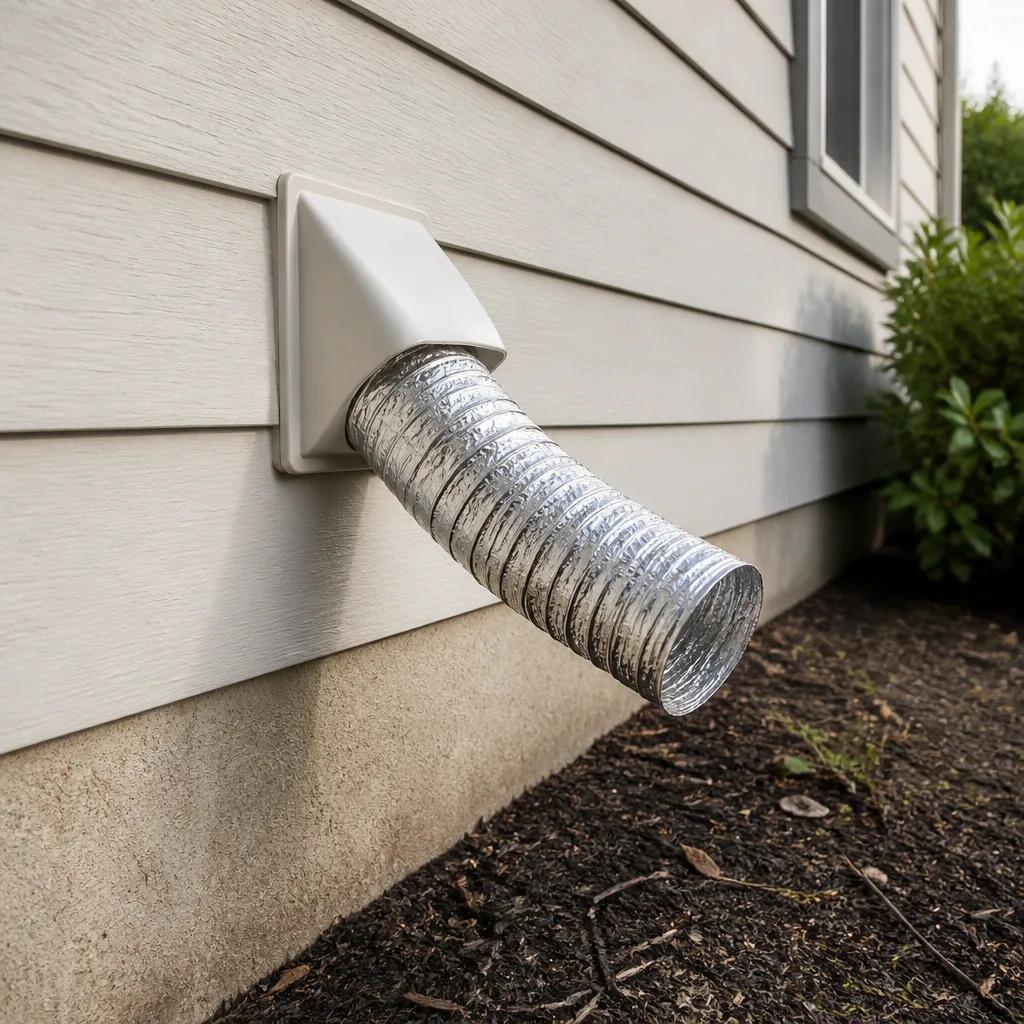 Dryer vent cleaning
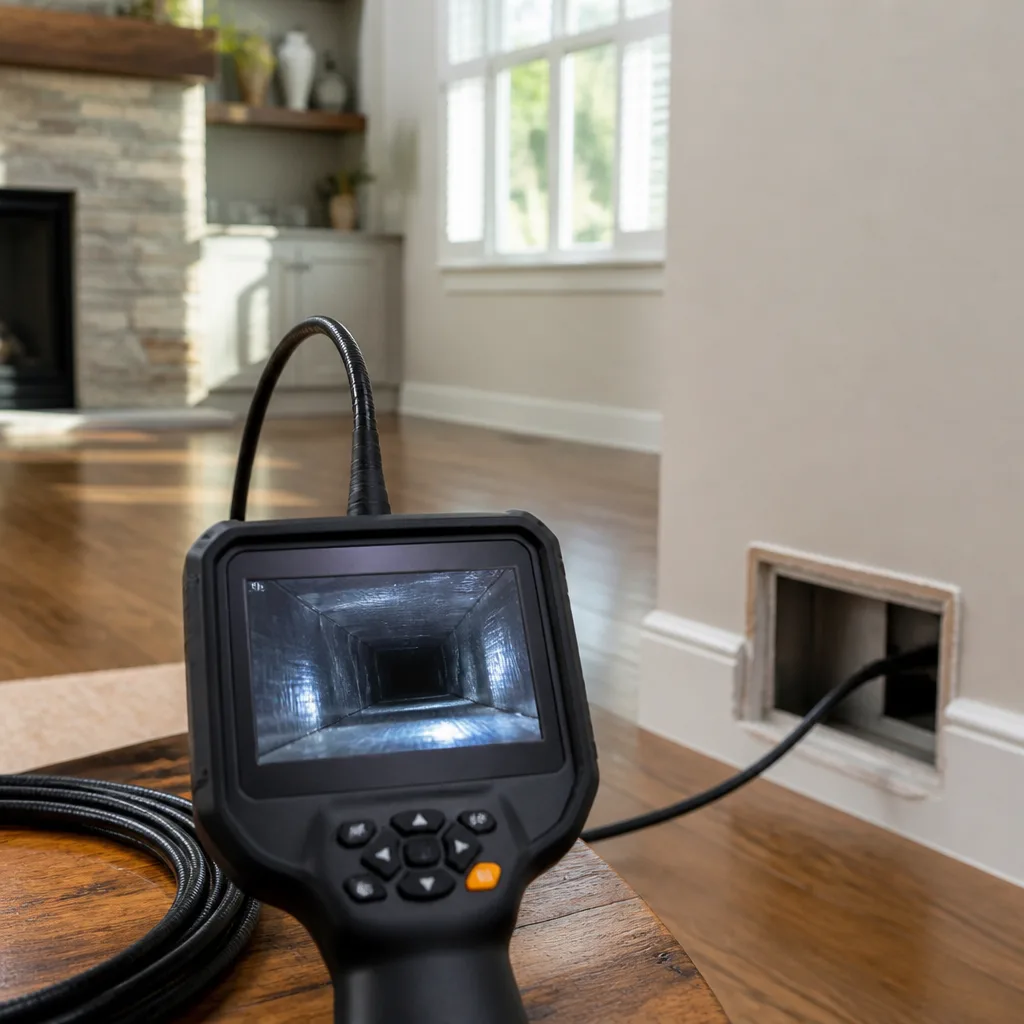 Camera inspection
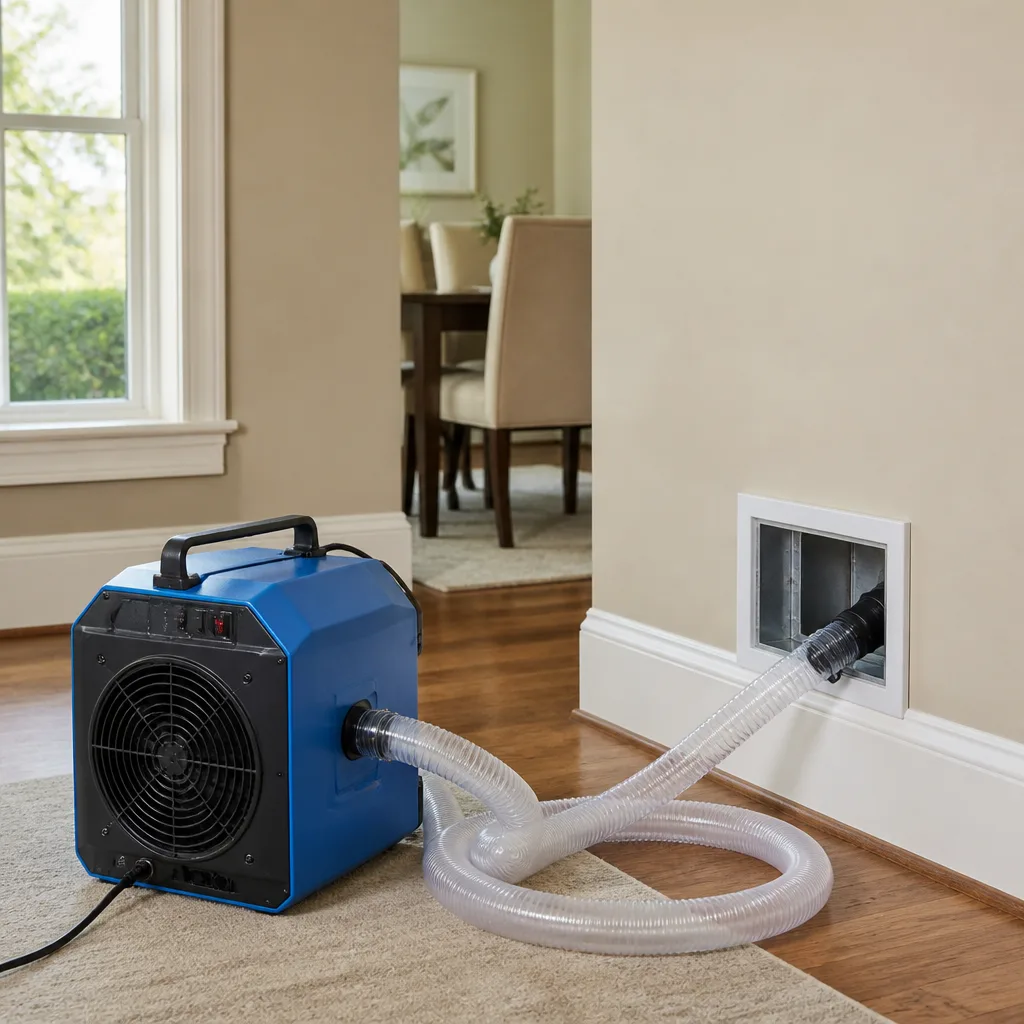 Sanitizing & deodorizing
Whole-system duct and dryer vent check with before-and-after photos - you see exactly what came out of your vents
That "$99 whole-house special" is a bait ad - the real number appears once they are in your hallway, or the "clean" is a shop-vac at the register. We photograph the inside of your ducts before and after instead.
Air Duct Cleaning Emergency Preparedness Guide for Brandon Homes
After a tropical storm, most Brandon homeowners check the roof, the windows, and the yard. The duct system, which may have pulled in debris, water, or attic insulation during pressure swings, usually goes uninspected until someone notices a smell weeks later. That gap is the problem this guide closes. We’ll walk through what storm events actually do to ductwork, the inspection sequence to run before you restart the air conditioner, how to tell water damage from ordinary dirt, why smoke behaves differently than dust, and how to document your system before storm season so an insurance claim isn’t a fight.
Quick Answer
A post-storm duct inspection in Brandon should happen before you turn the HVAC system back on, not after. Check the air handler cabinet, return grilles, exterior vent terminations, and any attic duct runs for water, displaced insulation, and disconnected flex joints. If duct liner is saturated, it needs replacement, not cleaning. Call (844) 834-1263 for a free estimate if you’re unsure what you’re looking at. We answer 24/7. Fast dispatch from 7am to 7pm, Sunday through Friday.
Styles & brands we work with
- Whole-home duct cleaning
- Dryer vent cleaning
- Camera inspection
- Sanitizing & deodorizing
Table of Contents
- What Storm Events Actually Do to Duct Systems
- The Post-Storm Inspection Sequence
- Water Intrusion: When Cleaning Isn’t the Answer
- Fire and Smoke Events: Why Standard Cleaning Falls Short
- Pre-Storm Preparation Checklist
- Documenting Your Duct System for Insurance
- When a Duct Inspection Is Actually Urgent (and When It Isn’t)
- Common Mistakes to Avoid
- When to Call a Professional
- Frequently Asked Questions
What Storm Events Actually Do to Duct Systems
Ductwork is a pressure system. Under normal conditions, it holds a slight positive pressure on the supply side and a slight negative pressure on the return side. A hurricane or strong tropical storm disrupts that balance in ways most people never consider.
When high winds rake a house, pressure differentials build across the building envelope. A window on the windward side pushes inward, a door on the leeward side pulls outward, and the entire house becomes a pressure vessel for a few hours. That pressure finds the weakest points: duct connections, vent caps, and any place where flex duct was stapled or taped rather than properly sealed.
- Dislodged flex duct connections. The inner liner of flex duct can separate from the collar at the air handler or a register boot. The result is a duct that’s technically still hanging but blowing conditioned air into the attic instead of the room.
- Insulation displacement. Loose-fill attic insulation gets airborne during pressure events and settles into return runs, register boots, and any open duct end. A return grille packed with fiberglass is a common post-storm find in Brandon attics.
- Exterior debris through vent caps. Roof vent caps, gable vents, and soffit vents are designed to shed water, not to resist wind-driven debris. Leaves, shingle grit, and insect debris can find their way into the system when a cap is damaged or missing.
- Membrane breaches from impact damage. A limb through the roof deck or a piece of flying material against a vent termination can open a path that didn’t exist before. The hole may be small enough to miss from the ground.
None of this is visible from a walkthrough of the living room. It’s found by opening the air handler cabinet and walking the attic. That’s why the inspection sequence matters more than a visual scan from the floor.
The Post-Storm Inspection Sequence
Run these steps in order, and do not restart the HVAC system until you’ve finished. Restarting first distributes whatever got into the system through every room in the house.
- Turn the thermostat off and pull the air handler disconnect. Confirm the system is de-energized before you open anything. If your air handler is in the attic, take a light and wear a respirator; attic air after a storm can carry insulation fibers and mold spores.
- Open the air handler cabinet and check for standing water, wet insulation, and debris on the blower wheel. A wet cabinet is the single biggest red flag. Water in the cabinet means water in the system, and water in the system means the liner downstream needs evaluation.
- Inspect the return grilles throughout the house. Remove each grille and look at the duct collar behind it. Insulation packed against the grille, visible water staining, or a duct that has pulled away from the boot all indicate a problem worth documenting.
- Check the exterior vent terminations on the roof or gable. Look for missing caps, bent louvers, or obvious impact damage. If you can’t safely access the roof, note the condition from the ground and flag it for a professional.
- Walk the attic duct runs. Follow every flex run from the air handler to the register boot. Look for sagging (a sign of water weight), separated connections, crushed sections, and insulation that’s been pulled loose.
- Smell the supply air before restarting. With the system off, put your face near a supply register and breathe in. A musty, damp, or chemical smell is your cue to keep the system off and get it inspected.
- Photograph everything you find before you touch it. Documentation comes before cleaning. Insurance adjusters want to see the condition as found, not after.
If any step turns up water, a separated connection, or a smell you can’t place, stop. That’s the point at which a professional inspection saves you from a much larger problem. Our team can run this sequence with the right equipment and give you a written assessment. Call (844) 834-1263.
Water Intrusion: When Cleaning Isn’t the Answer
This is where most post-storm duct advice goes wrong. Cleaning a system that has taken on water doesn’t fix it. It spreads the problem.
Most residential duct in Brandon homes is either flex duct with an internal liner or rigid duct board with a foil facing. Both have porous surfaces. When water reaches that liner, it wicks into the fiberglass matrix and stays there. The attic in Brandon during hurricane season is a warm, humid environment, which is exactly what mold needs to colonize. Cleaning the surface of a saturated liner doesn’t dry the liner. It just disturbs it.
So how do you tell water damage from ordinary dirt?
- Staining on the liner or duct board facing. Water leaves a tide-line stain even after it dries. Look for a darker band along the bottom of a horizontal run.
- Sagging duct runs. Wet insulation is heavy. A run that used to hang straight and now dips in the middle is a candidate.
- A musty smell that doesn’t clear when the system runs. If the smell gets stronger when the fan is on, the source is in the system.
- Visible mold growth at the air handler or register boots. Any visible growth on duct surfaces is a stop signal.
- Roof damage above a duct run. If a section of roof deck above the attic was damaged or missing during the storm, assume the duct below it got wet until proven otherwise.
When liner is saturated, the answer is replacement of that section, not cleaning. That’s a scope decision a trained technician makes after inspecting. It’s also why we offer duct cleaning in Brandon alongside air duct repair as separate services. A company that only cleans will clean what should be replaced. A company that only repairs never gets the rest of the system clean.
Fire and Smoke Events: Why Standard Cleaning Falls Short
Smoke is not dust. That distinction matters more than most homeowners realize. Standard duct cleaning removes accumulated particulate: dust, hair, pet dander, construction debris. Smoke is a different problem because it’s a mix of fine particulates and volatile organic compounds that deposit on surfaces as a sticky residue. That residue continues to off-gas for weeks after the fire is out.
Compounding the problem, smoke doesn’t just travel through the duct system. It travels through every gap in the building envelope. During a fire, the HVAC system becomes a distribution network for smoke if it’s running, pulling combustion products into the return and pushing them through the supply. Even if the system was off, smoke infiltrates ductwork through the same paths it uses to get into wall cavities and attics.
What that means practically:
- A standard brush-and-vacuum clean won’t remove smoke residue from duct surfaces. The residue clings to the liner and resists mechanical agitation alone.
- The air handler itself needs attention. Blower wheels, evaporator coils, and cabinet interiors all collect smoke residue. Cleaning the ducts without cleaning the equipment leaves the source in place.
- Negative air pressure matters more after a smoke event than after a normal cleaning. Capturing dislodged residue at the source prevents it from re-depositing in the living space while the work is going on. That’s why we deploy air duct cleaning equipment from Abatement Technologies that creates negative air pressure during the job. It’s the difference between removing contamination and moving it around.
- The system may need to stay off until the cleaning is complete. Running the fan during or after a smoke event just distributes residue. Keep it off and let the cleaning happen first.
If your home has been through a fire, even a small one contained to one room, get a duct assessment before you move back in. The duct system is the last place residual smoke shows up and the first place it lingers.
Pre-Storm Preparation Checklist
Preparation costs an afternoon. Recovery costs weeks. Here’s what’s worth doing before storm season in Brandon. The Atlantic hurricane season runs June through November, so the earlier in spring you handle this, the better.
- Inspect and secure exterior vent caps. Every roof vent cap, gable vent, and soffit vent should be intact and fastened. A cap that’s already loose won’t survive a wind event. This is the single highest-value pre-storm check for duct protection.
- Photograph your duct system in normal condition. Open the air handler cabinet, photograph the blower and coil. Photograph the return grilles. Walk the attic and photograph the visible duct runs. These “before” photos are gold if you file a claim.
- Seal obvious attic gaps. Any place where ductwork passes through the ceiling or a knee wall should be sealed. Gaps let in wind-driven rain and attic air.
- Protect the air handler. If your air handler is in the attic and the roof above it is vulnerable, consider a simple cover or a protective housing. This is a real consideration in Brandon homes where the air handler sits under a roof deck that has seen storm damage before.
- Document your filtration setup. If you run a whole-home air cleaner from Honeywell or Aprilaire, photograph the model and filter size. After a storm, knowing what you’re replacing saves time and money.
- Clear the attic of loose items. Loose boxes, insulation bats, and stored items become projectiles during high winds and end up in your ductwork.
- Check your homeowners policy for duct coverage. Before the storm, not after. Ask your agent specifically whether duct cleaning or duct repair after water intrusion is covered and what documentation they require.
What we’ve seen in our experience: the homeowners who file the smoothest claims are the ones who had photos before the storm. It’s not about the storm damage being bigger or smaller. It’s about being able to prove the condition before and after.
Documenting Your Duct System for Insurance
Insurance claims for duct damage after a storm are usually winnable with the right documentation and usually lost without it. The adjuster isn’t in your attic when you file. They’re relying on what you submit.
What to document, in order:
- Pre-storm condition photos. Every visible duct run, the air handler cabinet, return grilles, and any exterior vent terminations. Date the photos.
- Post-storm photos taken before any cleaning. The condition as found. This is the document that establishes damage.
- A written scope from a qualified technician. A description of what was found and what it will take to correct it. This is where a written estimate does double duty as a claim document.
- Any contractor service records. If you’ve had duct work done before the storm, those records help establish baseline condition.
- A moisture reading if water is suspected. A technician with a moisture meter can read a duct liner and tell you whether it’s dry.
What not to do: don’t clean the system before documenting, don’t throw out damaged duct material before the adjuster has seen it, and don’t accept a phone estimate for the repair. Get it in writing.
One more note: dryer vent damage after a storm is often overlooked on insurance claims because it’s a separate service. If your roof-mounted dryer vent termination was damaged, that’s worth noting as part of the claim. Our dryer vent cleaning service includes inspecting the vent termination, which is part of the same exterior envelope the adjuster is evaluating. And it’s a good reminder to note the vent termination in any pre-storm photo set.
When a Duct Inspection Is Actually Urgent (and When It Isn’t)
Not every storm warrants a duct inspection. Hard rain and a few branches in the yard don’t necessarily mean anything went wrong inside the system. Here’s the distinction.
Get an inspection within days, not weeks, if:
- The roof sustained visible damage or any section of decking was breached.
- You see water staining on interior ceilings or walls near duct runs.
- You smell a musty or chemical odor when the system runs.
- You noticed the air handler cabinet got wet for any reason.
- You found insulation inside a return grille.
An inspection can wait until a normal scheduling window if:
- Your home came through without exterior damage.
- The system runs normally, no unusual odor, normal airflow at every register.
- You’re simply due for a routine cleaning.
What we don’t recommend is waiting for a smell to develop. By the time you smell mold growth, it’s been growing for a while. A simple inspection with the system off costs you an hour and gives you a clear answer.
Common Mistakes to Avoid
- Restarting the HVAC before inspecting. Running the system after a storm distributes whatever got into the ductwork through every room. Once it’s blown through, it’s in your furniture, your soft goods, and your lungs.
- Assuming a cheap quote is a deal. The low-price storm-chaser offers that show up after every major event in Brandon are offering a shop vacuum and an hour on site. That’s not duct cleaning, and it doesn’t address the water or separation issues that actually threaten your system.
- Cleaning a system that should be repaired first. If a run is disconnected, cleaning the rest of the system just re-contaminates it. Repair and cleaning need to happen in the right order. That’s why we treat air duct repair as a standalone service.
- Forgetting the vent caps. Exterior termination damage is the most overlooked post-storm issue and the most common entry path for water and debris. If a cap is missing, the fix isn’t duct cleaning, it’s a repair.
- Cleaning before documenting. Insurance adjusters need to see the condition as found. Cleaning first means giving up your evidence.
- Never checking the air handler itself. The ducts are downstream of the air handler. If the blower cabinet is wet or the coil is fouled, cleaning the ducts doesn’t fix the source. A complete inspection covers the equipment, not just the pipes.
- Skipping the dryer vent. Storm damage to the dryer vent termination, or lint accumulation over time, is a separate fire hazard that most duct cleaners never look at. We include dryer vent cleaning in our service scope for exactly that reason.
When to Call a Professional
Call a professional when water is suspected in the duct system, when the air handler cabinet has gotten wet, when you smell something musty or chemical in the supply air, or when visible duct runs are separated or sagging. Call when an exterior vent termination has been damaged. Call when you’ve had a fire, even a small one.
Don’t call for a routine cleaning and let a technician talk you into a bigger scope on the spot. Get a written assessment first. That’s what makes a service trustworthy: the scope is set by what’s actually wrong, not by what a technician wants to sell.
Duct Cleaning Brandon offers free estimates in Brandon. Call (844) 834-1263. We answer 24/7. Fast dispatch from 7am to 7pm, Sunday through Friday. Our technicians have up to 14 years of experience and work with Rotobrush and Nikro cleaning systems, Abatement Technologies containment equipment, and Guardsman access solutions. We clean around Honeywell and Aprilaire air quality equipment without disturbing it.
Frequently Asked Questions
Within a few days if there’s any sign of roof damage, water intrusion, or a smell in the supply air. If your home came through clean with no visible damage, you can wait for a normal scheduling window. The key is not to restart the HVAC system until you’ve done at least a basic visual check at the air handler and return grilles. Call (844) 834-1263 if you’re unsure whether your situation is urgent. We answer 24/7, and estimates are free.
Yes, through damaged or missing exterior vent caps, and through gaps around roof penetrations. High winds during a tropical storm can also dislodge flex duct connections inside the attic, which lets attic insulation and debris into the return side. A missing vent cap is the most common entry point we see after a storm in Brandon.
Water damage leaves staining on the duct liner, causes duct runs to sag under the weight of wet insulation, and produces a musty smell that gets stronger when the system runs. Ordinary dust and debris don’t sag or smell. If a moisture meter reads wet at the air handler or a duct run, that section needs to be evaluated for replacement, not cleaning. Call (844) 834-1263 for an assessment.
Smoke residue is a mix of fine particulates and volatile organic compounds that deposit as a sticky residue and continue to off-gas. Mechanical agitation alone doesn’t remove it from duct surfaces, and the air handler needs cleaning too. A fire event calls for a scope that includes equipment cleaning and negative air pressure during the work, not a routine pass with a rotary brush.
Often yes, if water or debris damage is documented and tied to a covered storm event. It depends on your specific policy. The key is documentation: pre-storm photos, post-storm photos taken before any cleaning, and a written scope from a qualified technician. Ask your agent before storm season what they’ll require.
Yes, within the scope of air duct cleaning. We work around Honeywell and Aprilaire whole-home air quality equipment without disturbing it, and we clean the air handler cabinet and blower where accessible. We don’t service or repair the filtration equipment itself. If repair is needed beyond duct scope, we’ll tell you what to do next. Call (844) 834-1263 for an exact scope.
The Bottom Line
Storm preparation for your duct system starts before the storm, not after. Photograph the system in normal condition, secure the exterior vent caps, and know what your homeowners policy covers. After a storm, run the inspection sequence before you restart the air conditioner: air handler, return grilles, exterior terminations, attic runs. Treat water damage as replacement, not cleaning. Treat smoke as a different problem than dust. And treat a low-price post-storm quote with the skepticism it deserves. Duct Cleaning Brandon does this work as a full-system scope. Call (844) 834-1263 for a free estimate. Written by the team at Duct Cleaning Brandon.
See the difference
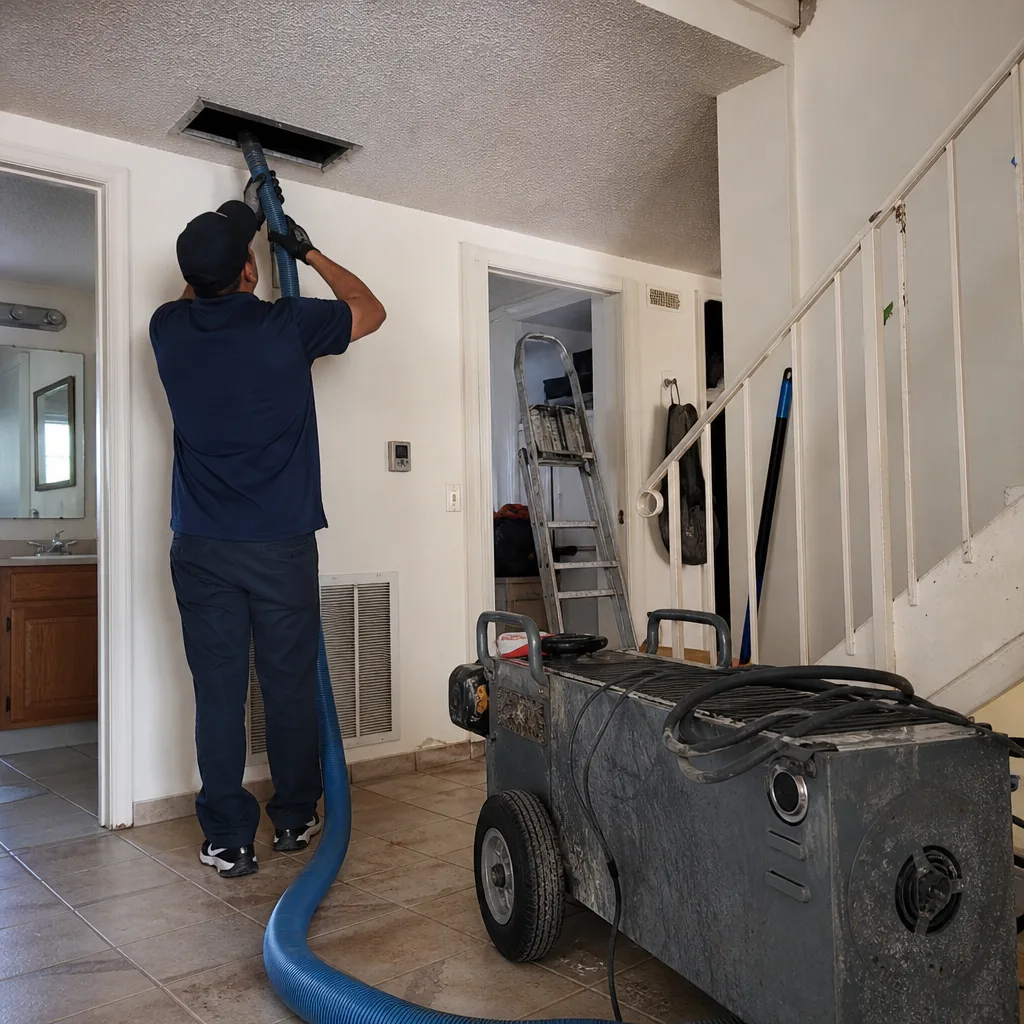 Before
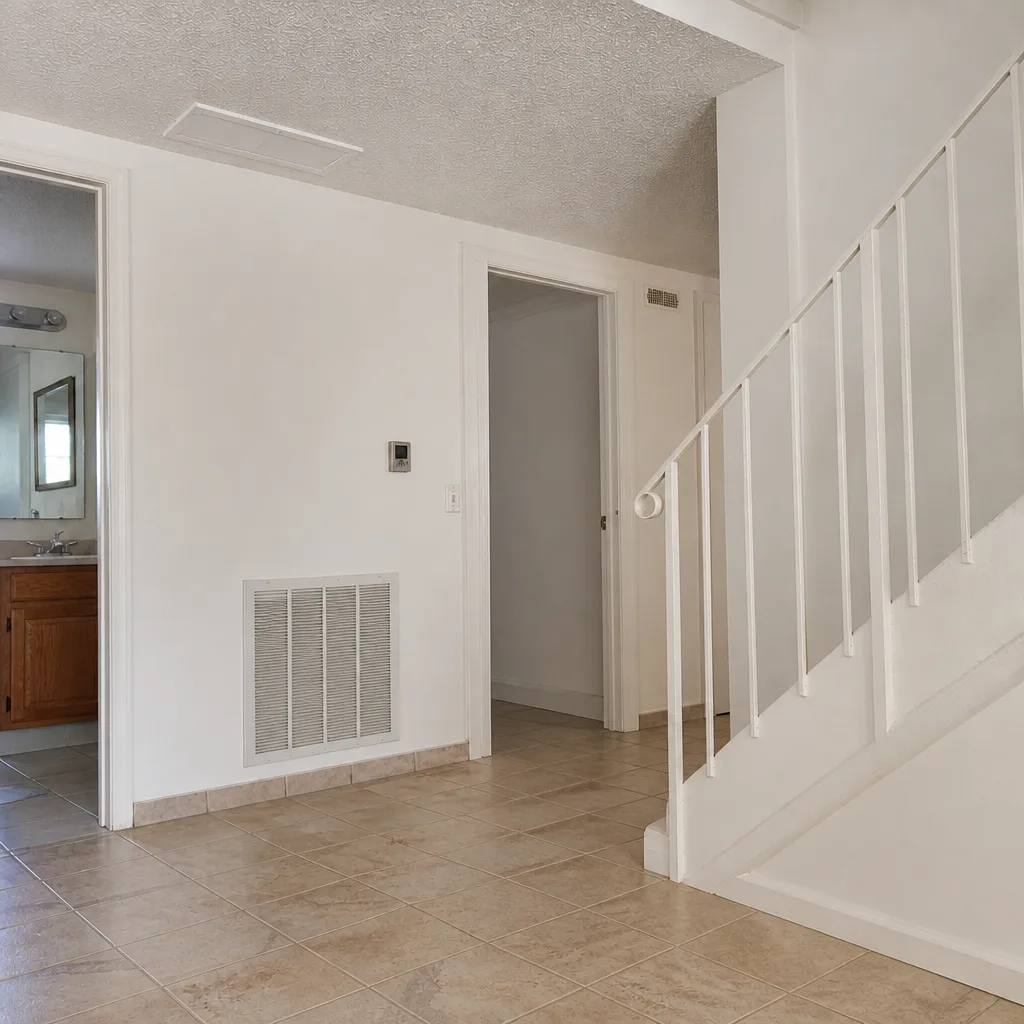 After
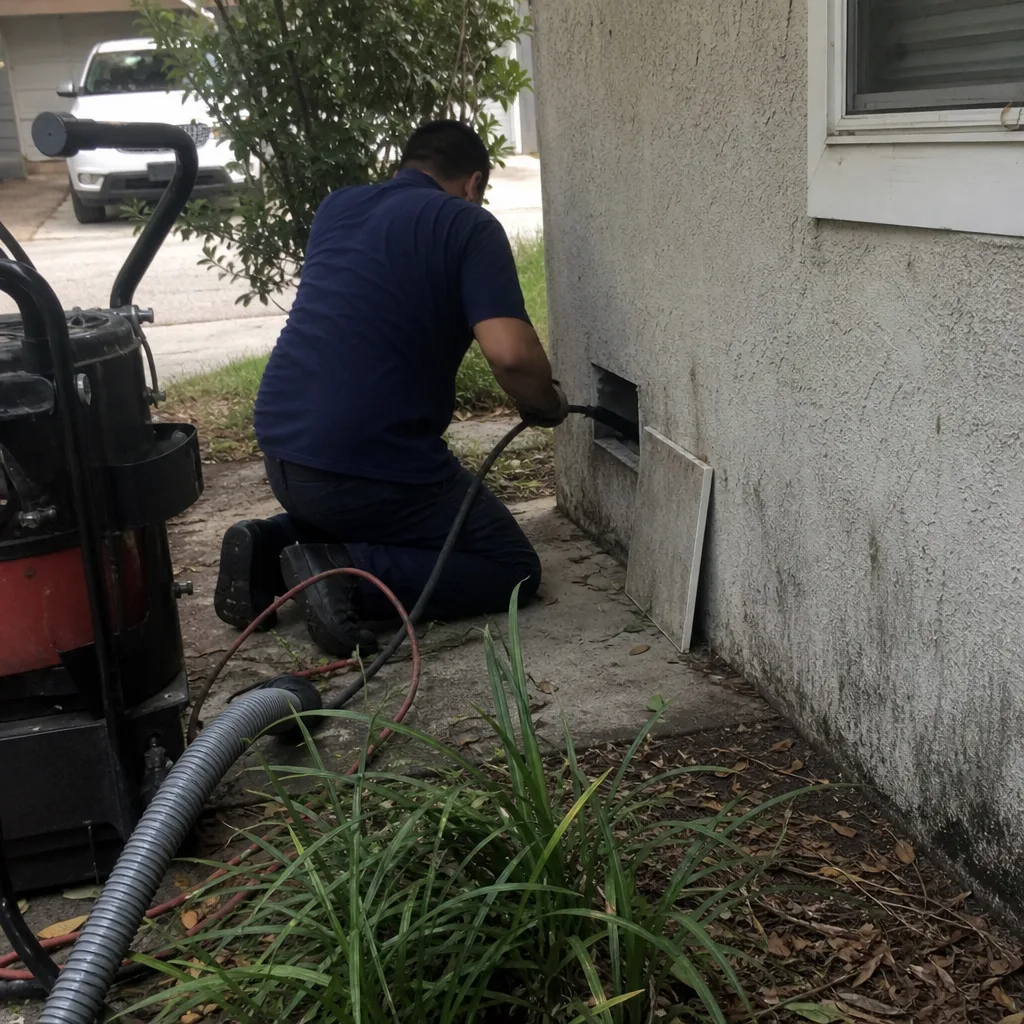 Before
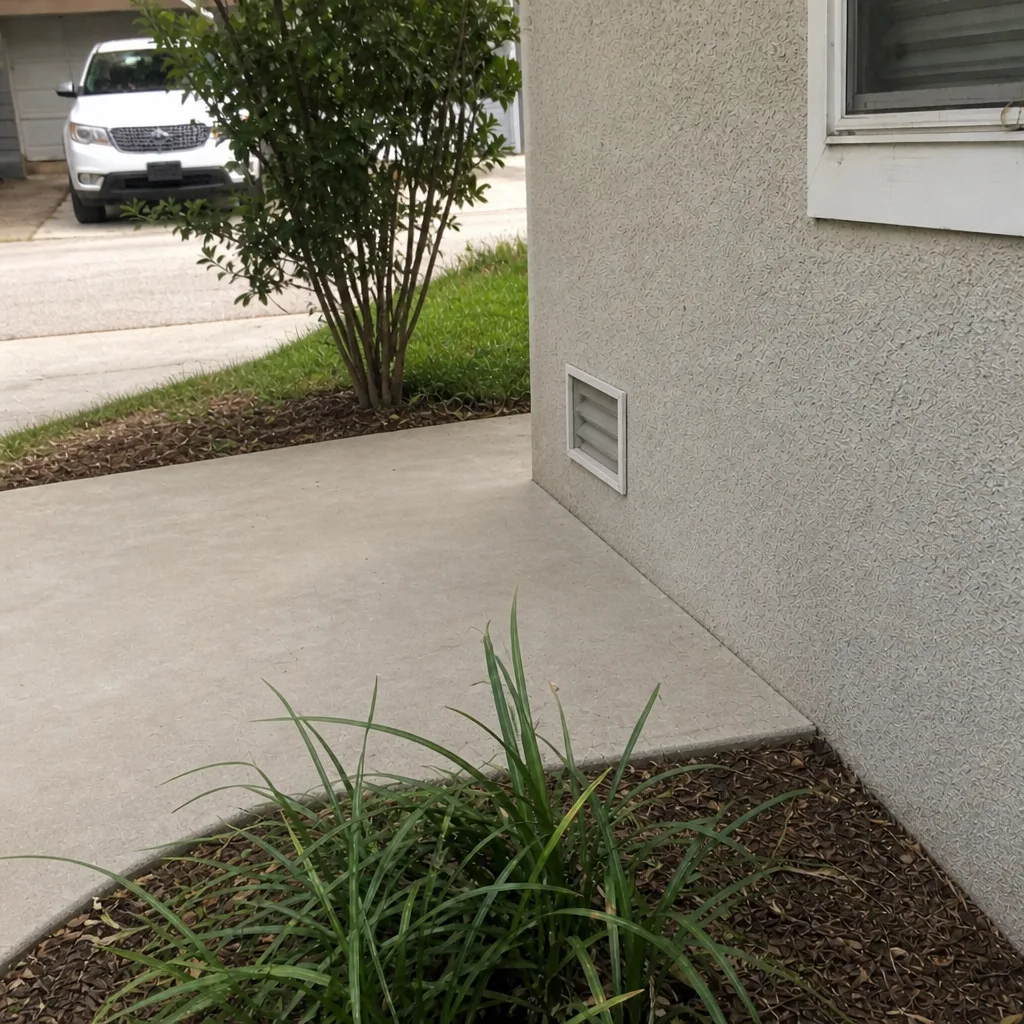 After
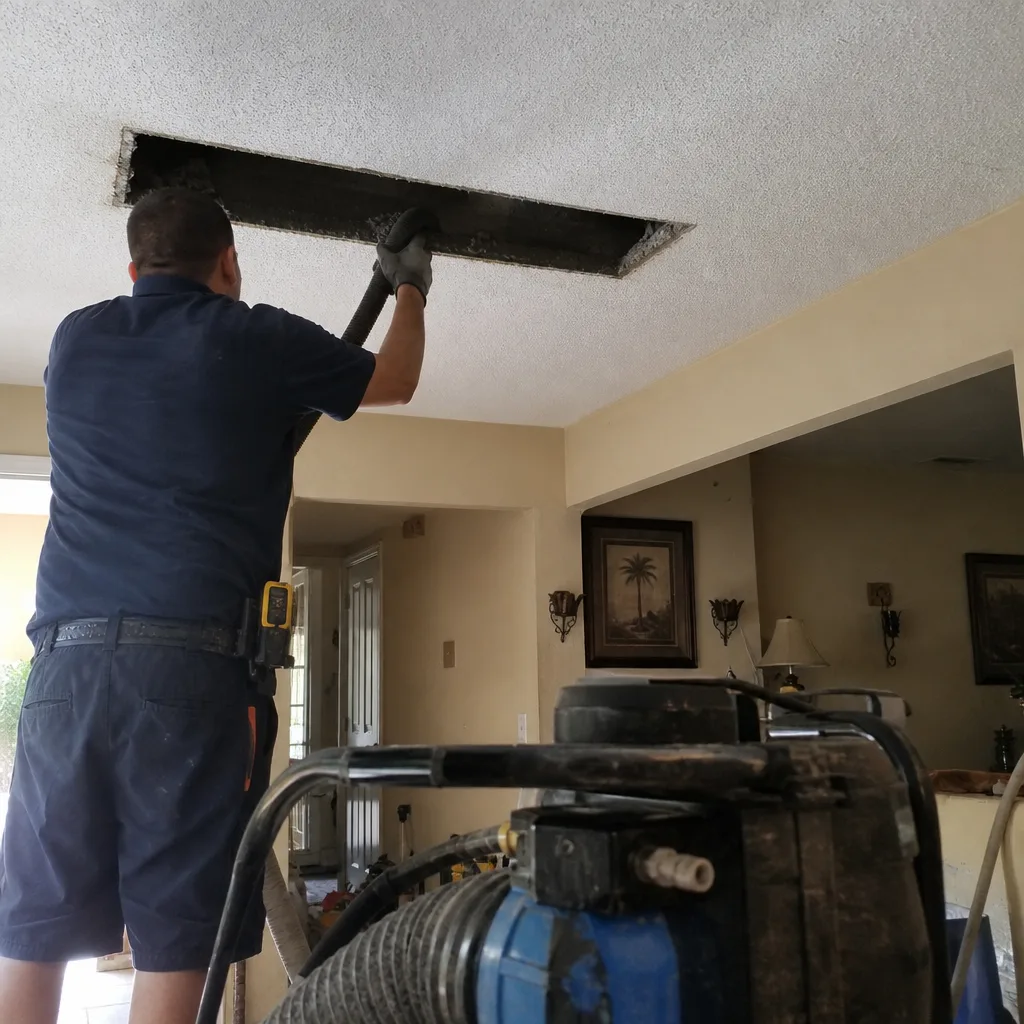 Before
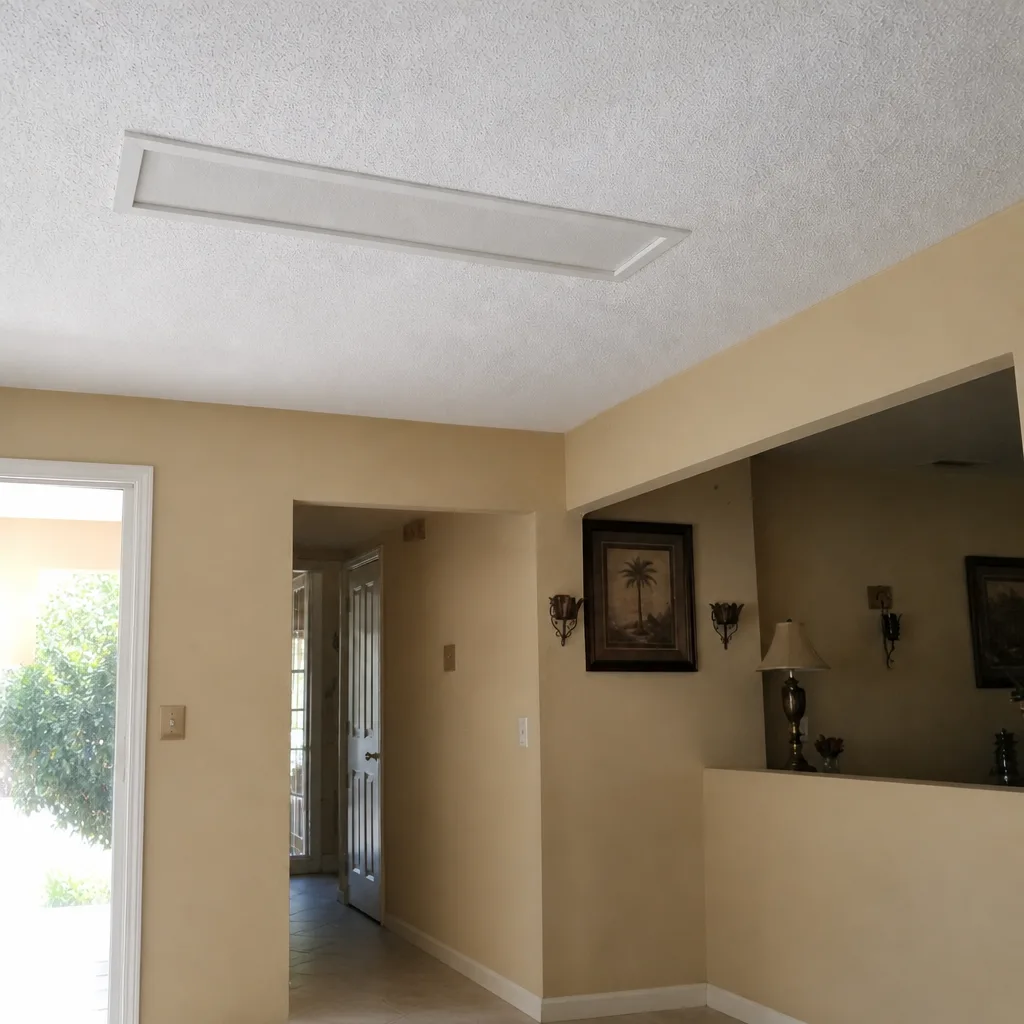 After