
Last updated November 15, 2026
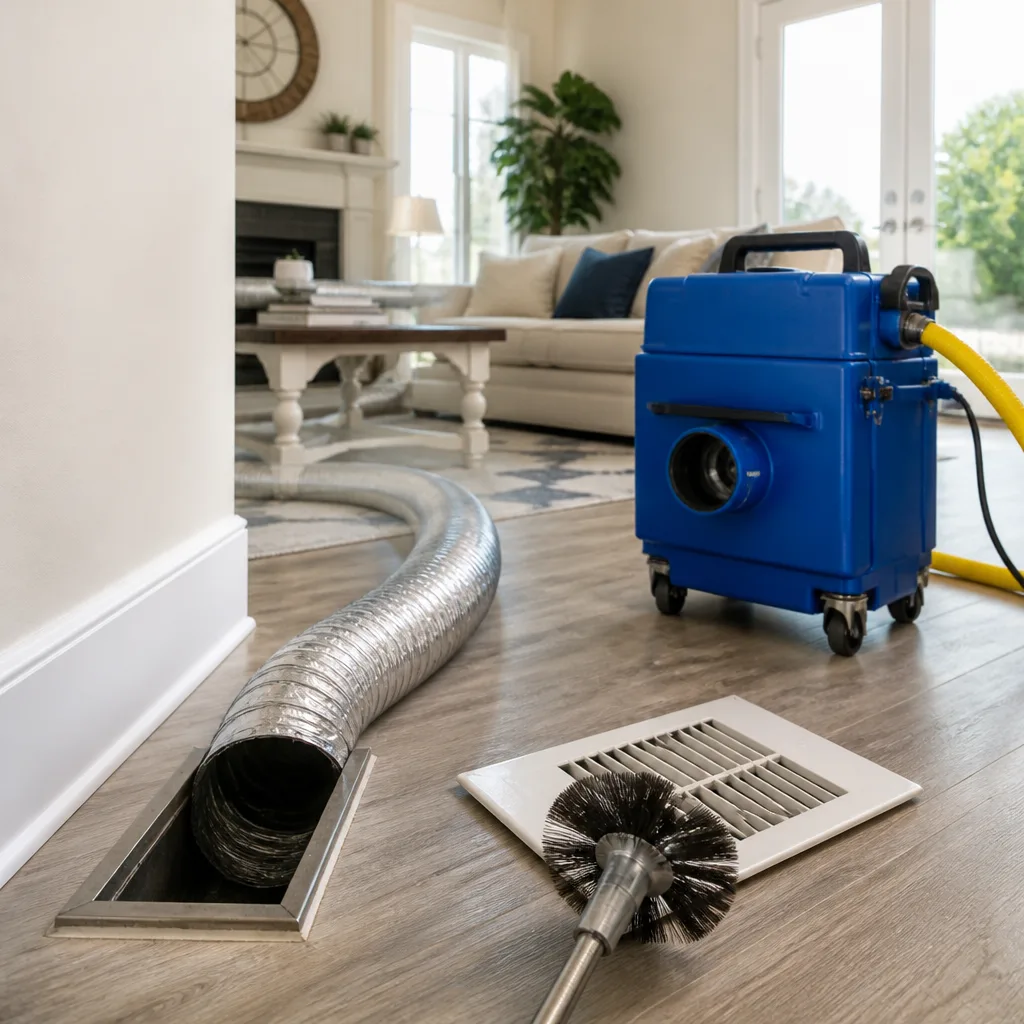 Whole-home duct cleaning
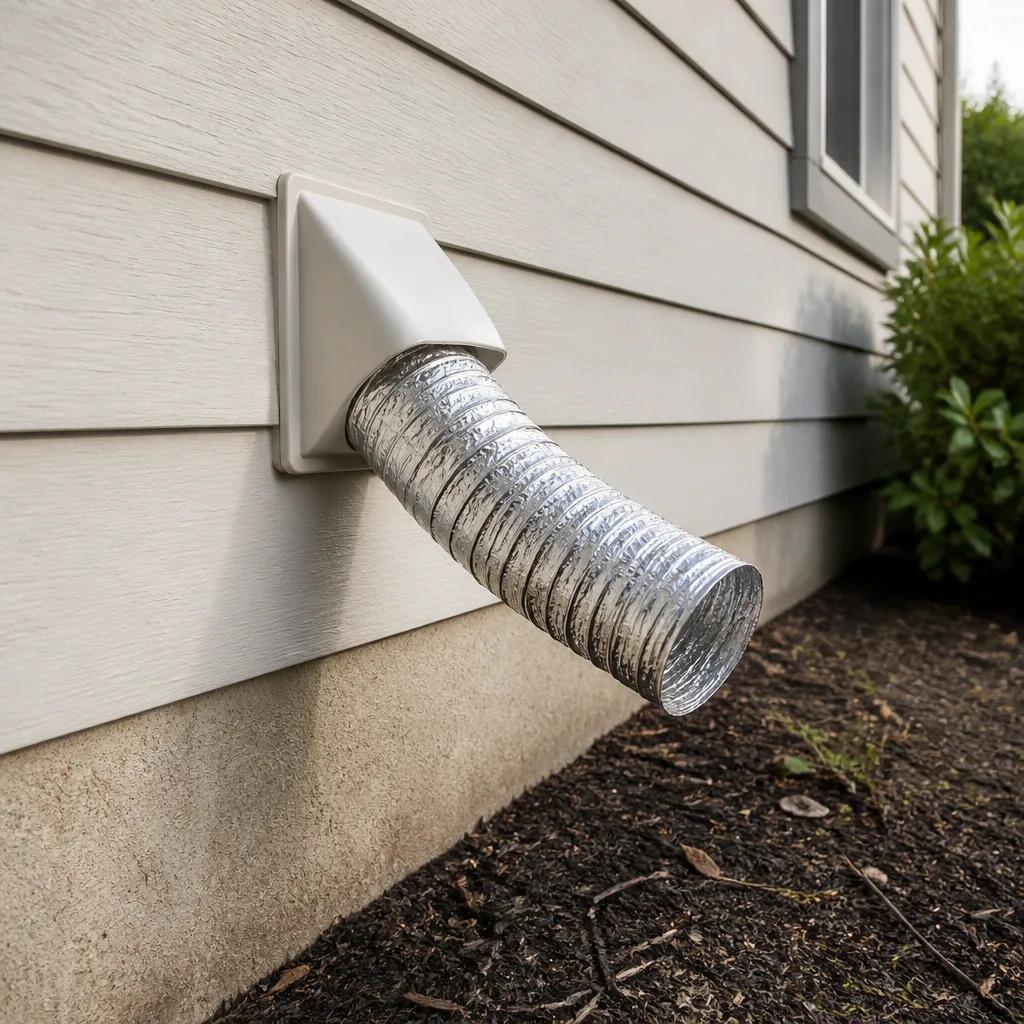 Dryer vent cleaning
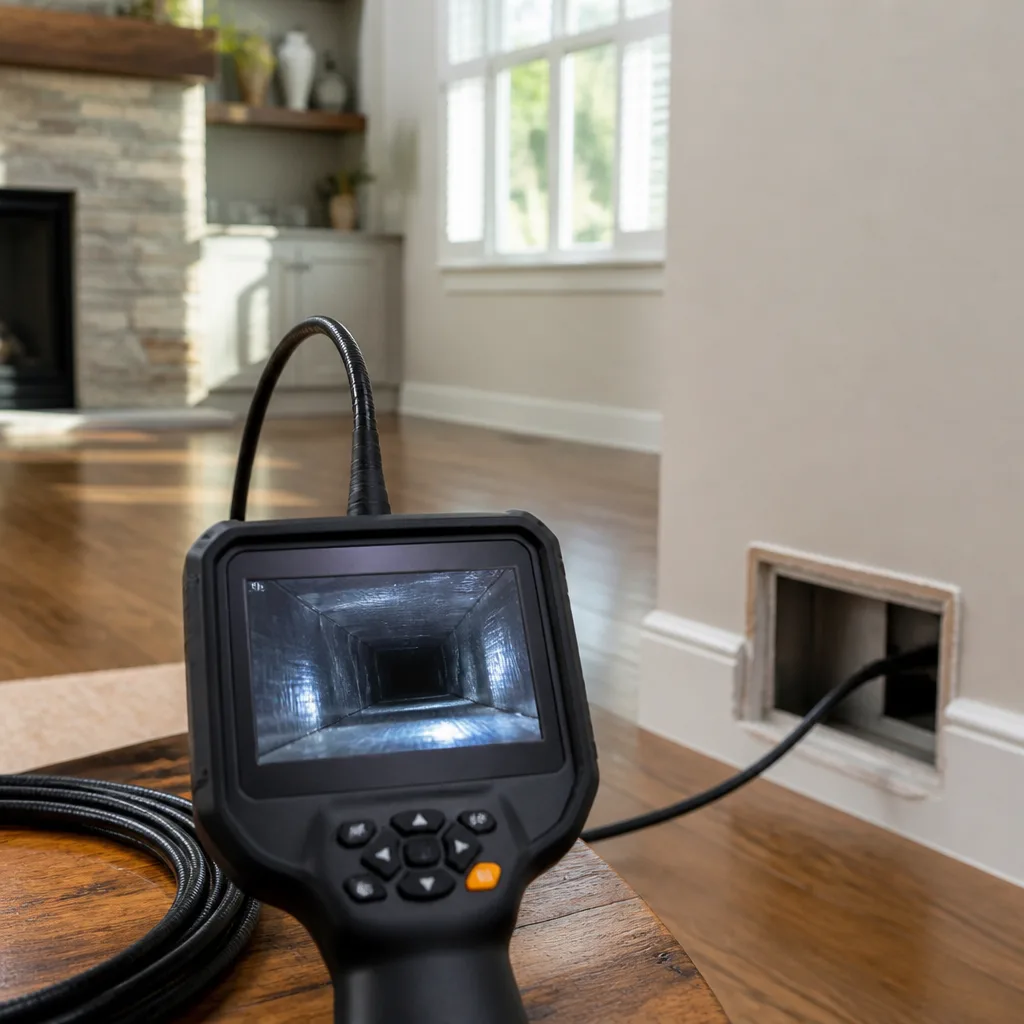 Camera inspection
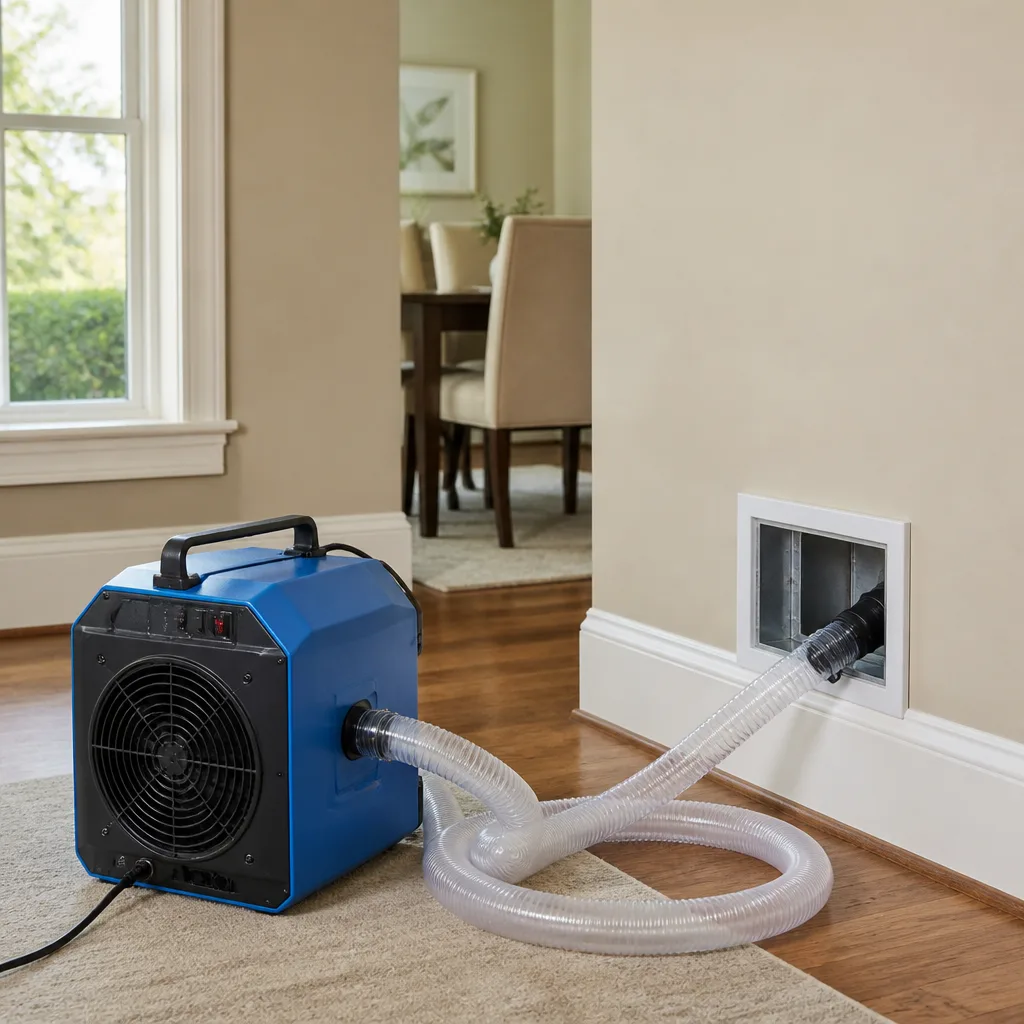 Sanitizing & deodorizing
Whole-system duct and dryer vent check with before-and-after photos - you see exactly what came out of your vents
That "$99 whole-house special" is a bait ad - the real number appears once they are in your hallway, or the "clean" is a shop-vac at the register. We photograph the inside of your ducts before and after instead.
DIY vs Professional Air Duct Cleaning: The Brandon Homeowner’s Decision Guide
Here’s a fact that surprises most homeowners: your shop vac can reach the register, but it can’t reach the problem. A $30 brush kit will legitimately clean the face of a supply grille, and there’s nothing wrong with doing exactly that. What that kit cannot do is put an entire duct system under negative pressure so that loosened debris gets captured instead of blown into the room you’re sitting in. That single distinction separates a reasonable weekend project from one that can make air quality worse. In this guide we’ll lay out what DIY genuinely accomplishes, where it crosses into pointless territory, which systems should never be touched by a homeowner, and how some Brandon homeowners combine both approaches on a sensible cycle.
Quick Answer
DIY air duct cleaning in Brandon is worth doing for register and grille cleaning, filter swaps, and visual inspection of accessible duct runs. It is the wrong choice for post-renovation cleanup, suspected mold, flex duct systems, or any ductwork that hasn’t been serviced in 5+ years, because consumer equipment can’t create the negative pressure required to capture debris at the source. Professional cleaning handles the full system from plenum to register with contractor-grade collection equipment; DIY handles the visible surface only.
Styles & brands we work with
- Whole-home duct cleaning
- Dryer vent cleaning
- Camera inspection
- Sanitizing & deodorizing
Table of Contents
- What DIY Air Duct Cleaning Can Legitimately Accomplish
- Why Negative Pressure Is the Whole Game
- The Four Situations Where DIY Is a Net Negative
- Equipment Comparison: Capability Classes, Not Brand Names
- The Hybrid Approach: Pairing Annual DIY With Professional Cycles
- What Makes Brandon Ductwork Its Own Case
- What Professional Duct Cleaning Costs in Brandon
- Common Mistakes to Avoid
What DIY Air Duct Cleaning Can Legitimately Accomplish
Start with the honest scope. There is a real, useful, homeowner-level job to be done inside a duct system, and doing it correctly extends the time between professional visits. The three tasks below are the ones we’d never talk a Brandon homeowner out of doing themselves.
1. Register and grille cleaning
Supply registers and return grilles accumulate dust, pet hair, and lint on their faces and behind their louvers. This is the surface layer of the system and it’s completely accessible. Remove the grille (most are held by two screws or friction clips), wash it in warm soapy water, dry it fully, and wipe the visible boot and the first few inches of duct you can reach with a damp cloth. Reinstall it snug. That’s it. No tools beyond a screwdriver, no special product. If the grille face is greasy near a kitchen return, a mild degreaser is fine as long as you dry it thoroughly before it goes back.
2. Filter maintenance
Filters are the homeowners’ half of the air quality equation, and in Brandon’s humid climate they load faster than many people expect. Check your filter monthly and change it on whatever schedule it actually fills to. A filter that’s visibly gray and matted is restricting airflow and costing you efficiency. Keep a spare on hand so a full filter doesn’t sit in the slot for weeks. If you run a Honeywell or Aprilaire filter cabinet, follow the media’s own change interval rather than a generic one; those cabinets take specific media and fitting the wrong one can bypass air around the filter entirely.
3. Visual inspection of accessible runs
You can look. In many homes, the first few feet of duct after the air handler or behind a return is visible with a flashlight and an inspection mirror. What you’re looking for: disconnected joints, crushed sections, torn flex, visible condensation, dark staining, or a musty smell at the register. Looking is not the same as cleaning. If you see one of those things, stop there and treat it as a repair question, not a cleaning question. Note it and move on.
That’s the legitimate DIY list. It’s not trivial, it’s just small, and it’s the part of the job the equipment doesn’t need to solve.
Why Negative Pressure Is the Whole Game
Here’s the principle that separates a professional cleaning from everything else. When you agitate dust inside a duct, you’ve now made it airborne, and airborne dust goes wherever the pressure takes it. Unless the system is under sustained negative pressure during agitation, a portion of that loosened debris leaves through the register into the living space. That is the entire reason the industry’s source-removal standard exists: capture at the point of origin, not a sweep-and-hope.
Negative pressure is measured in inches of water column (in. w.c.). Collection units that can hold an entire duct system below room pressure in real time are engineered around that measurement, with the airflow and static capacity to sustain it while a technician works every branch line. Consumer vacuums and box-store duct kits are simply not built to hold that level of vacuum across a distributed duct network. A shop vac draws a lot of air at zero resistance and loses its capacity almost immediately once it’s connected to real ductwork. It cannot pull a whole house negative. It can clean a register face and pull loose surface dust out of the first foot of accessible run, and it can do that well. Beyond that, it’s just moving air around.
This matters most when there’s anything biologically active in the ducts. Loose debris that gets redistributed is annoying. Loose debris from a system with suspected mold or a long, undisturbed accumulation is a different category of risk. In those cases, the pressure capture isn’t a nice-to-have, it’s the whole reason to hire someone.
The Four Situations Where DIY Is a Net Negative
These are the cases where grabbing a brush and a shop vac actively makes the situation worse, or at minimum wastes an afternoon and leaves the real problem in place.
- Post-renovation cleanup. Drywall dust, sawdust, and construction debris settle through every branch line. Agitating that without full negative pressure and containment fills the home with fine particulate that a shop vac can’t hold and a filter can’t catch up to. Renovation debris is also heavy and abrasive, and it tends to collect in the returns. This is a capture-and-contain job.
- Suspected mold or musty odor. Brandon’s humidity means duct systems here can support moisture conditions that grow biological contamination on interior surfaces, particularly on any run that’s cool, poorly insulated, or in a humid unconditioned space. A homeowner brushing at mold inside a duct without containment and appropriate protective equipment is spreading spores, not removing them. Stop and call a professional.
- Flex duct systems. Flex duct has an internal liner that a consumer brush can snag, tear, or abrade, and once it’s torn, the duct has to be replaced, not cleaned. Flex is common in newer Brandon construction and additions. Treat it as professional-only territory.
- Systems that haven’t been serviced in 5+ years. The first cleaning of a long-neglected system is the heaviest one. That’s when the accumulation is deepest, the loosened debris load is largest, and the containment requirement is highest. It’s also when a professional is most likely to find a disconnected joint or crushed run that explains a comfort complaint. A shop vac on a 6-year accumulation is the worst possible combination.
Equipment Comparison: Capability Classes, Not Brand Names
It’s more useful to think in capability classes than brand logos, because the class is what determines whether the job actually gets done. There are three, and only one of them is contractor-grade.
Class 1: Consumer equipment (shop vacs, box-store duct kits, register brushes)
- Draws air at zero resistance but loses capacity rapidly once connected to real ductwork
- No meaningful sustained negative pressure across a whole system
- No containment or HEPA-stage filtration
- Reaches the register face and the first foot of accessible run
- Fine for the legitimate DIY tasks listed above; inadequate for full-system work
Class 2: Generic HVAC service equipment (basic single-stage vacuums used by some generalists)
- More airflow than consumer gear, but no containment discipline
- Often cleans in one direction without proper agitation at the duct wall
- Typically no HEPA-grade exhaust filtration
- Can be a registration-and-filter-only service mislabeled as a full cleaning
Class 3: Contractor-grade collection and agitation systems
- Purpose-built machines engineered to sustain meaningful negative pressure across the full duct network while agitation runs
- Rotobrush rotary brush systems agitate the duct wall and extract simultaneously, so loosened debris is captured at the moment it’s released
- Nikro HEPA-filtered vacuum systems capture fine particulate at the source and exhaust filtered air, not vented particulate
- Abatement Technologies negative-air and containment equipment holds the work area under differential pressure so debris cannot cross into living spaces
- Air duct repair capability to fix breaches identified during cleaning, so a clean system doesn’t immediately re-contaminate
We use Rotobrush and Nikro systems and Abatement Technologies containment because the method requires the capability, not because a brand is on the equipment list. When you’re evaluating any quote in Brandon, ask specifically what class of collection unit will be used and whether negative pressure is held throughout the cleaning. A quote that can’t answer that question is a quote for a different service.
The Hybrid Approach: Pairing Annual DIY With Professional Cycles
The most cost-effective approach many Brandon homeowners land on is a simple split. DIY handles the register level on a regular basis; a professional handles the full system on a sensible cycle. The DIY work keeps the visible layer under control between visits, and the professional cleaning does the source-level work that the equipment requires.
A hybrid cycle that works
- Monthly: check and change the filter on its actual load schedule. Wipe register faces near kitchens and pet areas.
- Seasonally: pull each grille, wash, dry, reinstall. Look into the first few feet of accessible run with a flashlight. Note anything that looks disconnected, crushed, torn, or damp.
- Annually: a quick visual pass on accessible returns and the air handler area. Keep a short note of anything you want a professional to look at.
- Every 3 to 5 years (or sooner after renovation, water intrusion, or a move): full professional cleaning with negative pressure and containment, plus dryer vent cleaning if it’s been that long on the vent run.
We don’t claim that a homeowner-level routine replaces full-system cleaning; it doesn’t. What it does is extend the interval and keep the surfaces you touch and see from getting ahead of you. For more on our full process, see our air duct cleaning page. If you want to add dryer vent safety to the annual cycle, that’s a separate service and a recognized fire-prevention one; our dryer vent cleaning service covers that run.
What Makes Brandon Ductwork Its Own Case
Brandon’s humid subtropical climate does something to duct systems that cold-climate guides miss. Cooling runs stay cold for much of the year, and any poorly insulated or sweating section is a moisture source. That moisture supports biological growth on interior duct surfaces in a way that dry-climate systems rarely see. It also means that a duct system that hasn’t been serviced in 5+ years here is more likely to have something growing in it than a similar-aged system in a dry climate. That’s the situation where the DIY caution has real teeth.
Brandon’s housing stock adds another layer. Neighborhoods across the area have a wide mix of duct vintages, and some of the newer and remodeled homes run flex duct with internal liner that has to be treated differently than rigid metal. In those systems, we don’t run a rotary brush through liner-grade flex without first confirming the liner’s condition. Trying to DIY-clean a flex system with a consumer brush is the fastest way to turn a maintenance job into a duct replacement.
One more thing specific to Brandon: a lot of homes here have been through at least one renovation or addition, and construction debris settles in the branch lines and especially the returns. That’s a professional-only job every time. It’s also the most common reason homeowners call us after trying to handle it themselves first.
What Professional Duct Cleaning Costs in Brandon
Air duct cleaning in Brandon typically runs around $300 to $600 for a standard single-system home, with larger homes, additional systems, multiple returns, or a first-ever deep clean running higher. Dryer vent cleaning is a separate service and typically runs around $100 to $200 depending on the length and complexity of the run. Any duct cleaning quote that looks dramatically cheaper than those ranges usually is not a full-system cleaning. If duct repair work is needed for a discovered breach or disconnected joint, that’s priced as its own job.
- Standard single-system home duct cleaning: $300 – $600 typical range
- Larger home or multiple HVAC systems: higher, priced per system
- First-ever deep clean after renovation or long deferral: higher, priced per the condition
- Duct repair for a discovered breach or disconnected run: priced as its own job
- Dryer vent cleaning (separate service): $100 – $200 typical range
Those are typical estimated ranges, not a quote. The written estimate sets the final price, and we agree one flat price per system before any work begins. There’s no per-vent pricing and no teaser number that grows once the technician is on site. You’ll also get before-and-after photos of your own ductwork, so you can see exactly what came out of your system rather than taking our word for it.
The reason cheap offers exist at all is that a one-hour registration pass can be marketed as duct cleaning. Ask any company you’re considering whether they’ll hold negative pressure for the full cleaning, what collection equipment they’ll use, and whether they’ll show you before-and-after photos. If any of those questions gets a vague answer, you’re looking at a different class of service than the one the price implies.
Common Mistakes to Avoid
- Brushing a flex duct system. The internal liner snags easily, and once torn, the duct has to be replaced. If you’re not sure what type of duct you have, don’t run a consumer brush through it; check with a professional.
- Running a shop vac into a return while the system is on. The blower changes the pressure dynamics and can push loosened dust into the supply side and the living space. Never agitate ductwork while the system is operating.
- Treating post-renovation dust as a “big filter” problem. Drywall dust and construction debris have to be extracted at the source with proper containment. A higher-MERV filter will load fast and won’t address the settled material in the returns.
- Spraying fragrances or “duct cleaners” into the system to mask odor. Masking a musty smell hides the indicator without addressing the moisture and biological growth behind it. Odor at the register is a symptom, not the problem.
- Assuming a cheap offer is the same service at a lower price. A teaser number almost always means a register-only pass without full negative pressure. Ask what equipment and method are used before booking.
- Skipping dryer vent cleaning while you’re thinking about duct cleaning. The dryer vent is a separate, recognized fire-hazard system, and it’s often the longest-overdue maintenance in the home. It’s not part of the HVAC ducts and won’t be touched by an HVAC-only cleaning.
- Cleaning a suspected mold system yourself. Without containment and appropriate protective equipment, agitating a contaminated duct redistributes spores. That’s the one case where the right move is to stop and call.
See the difference
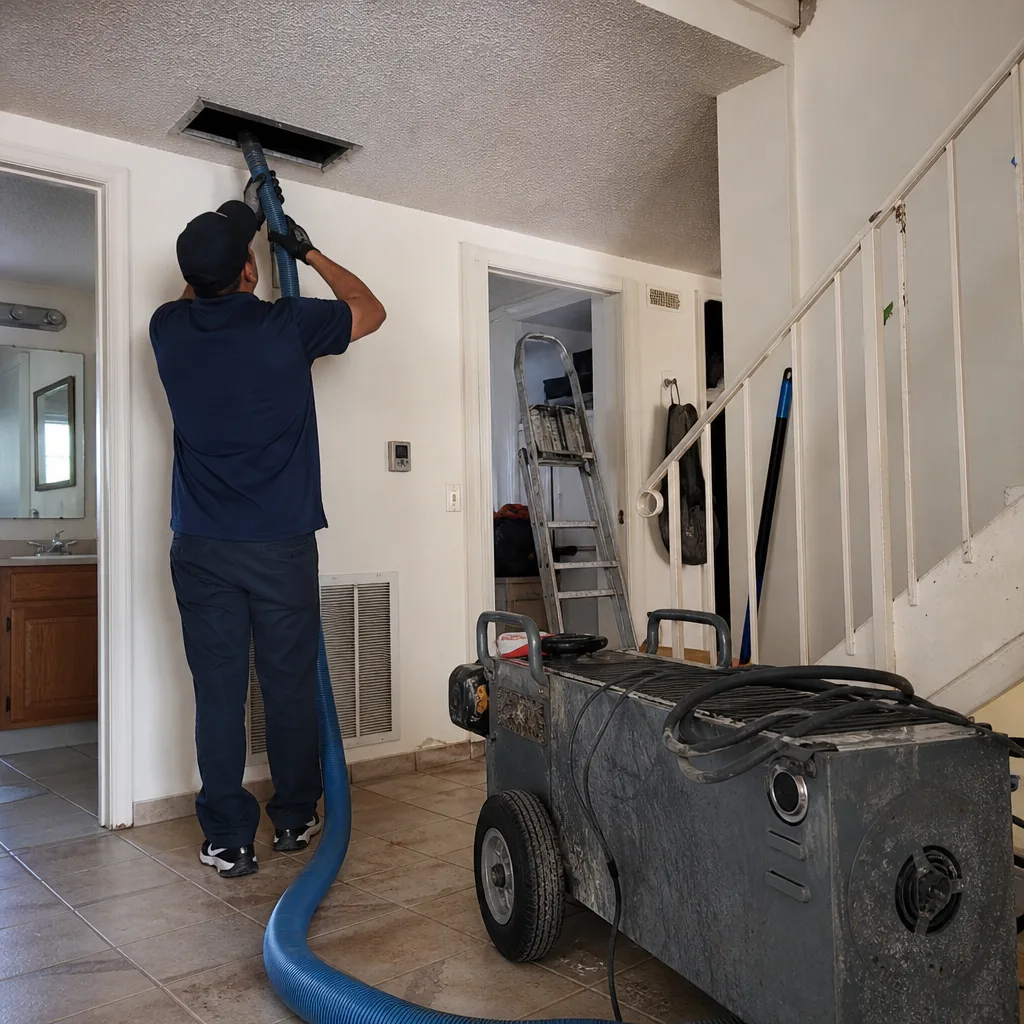 Before
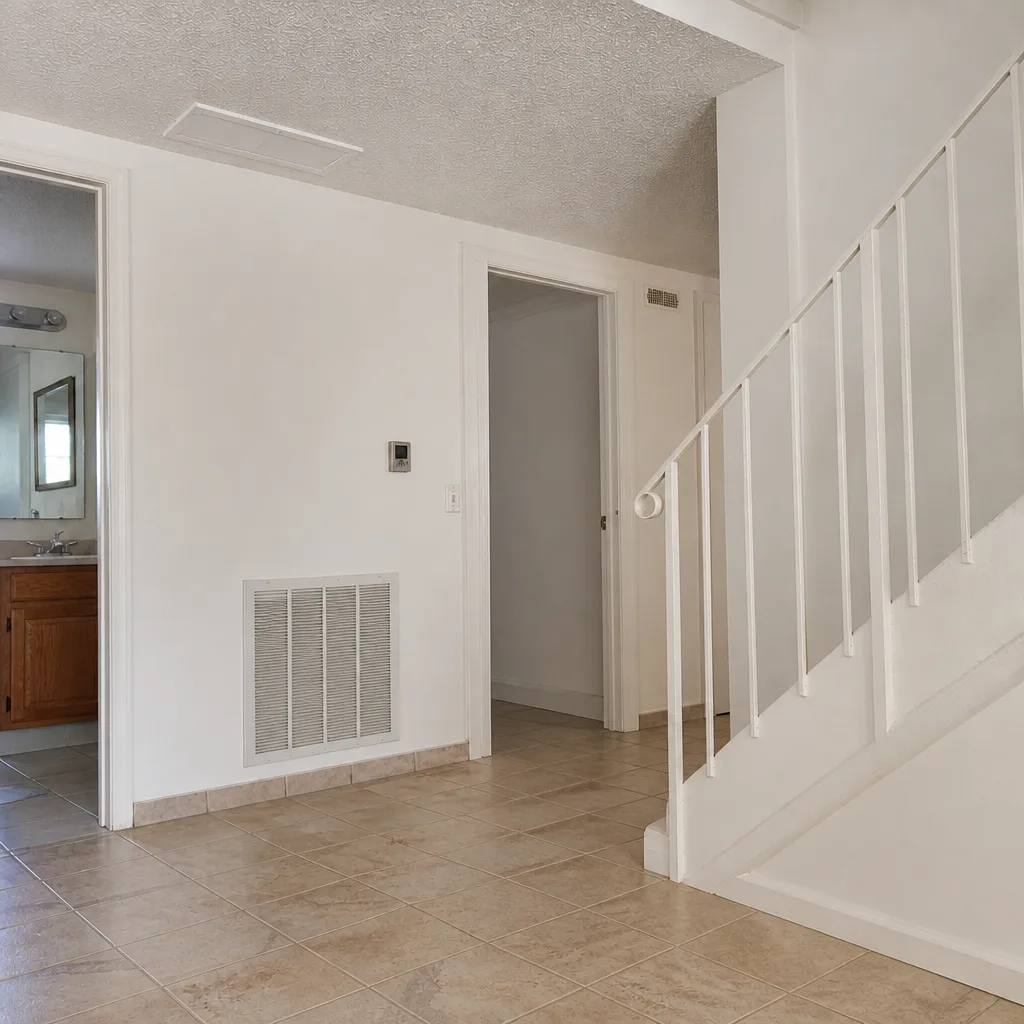 After
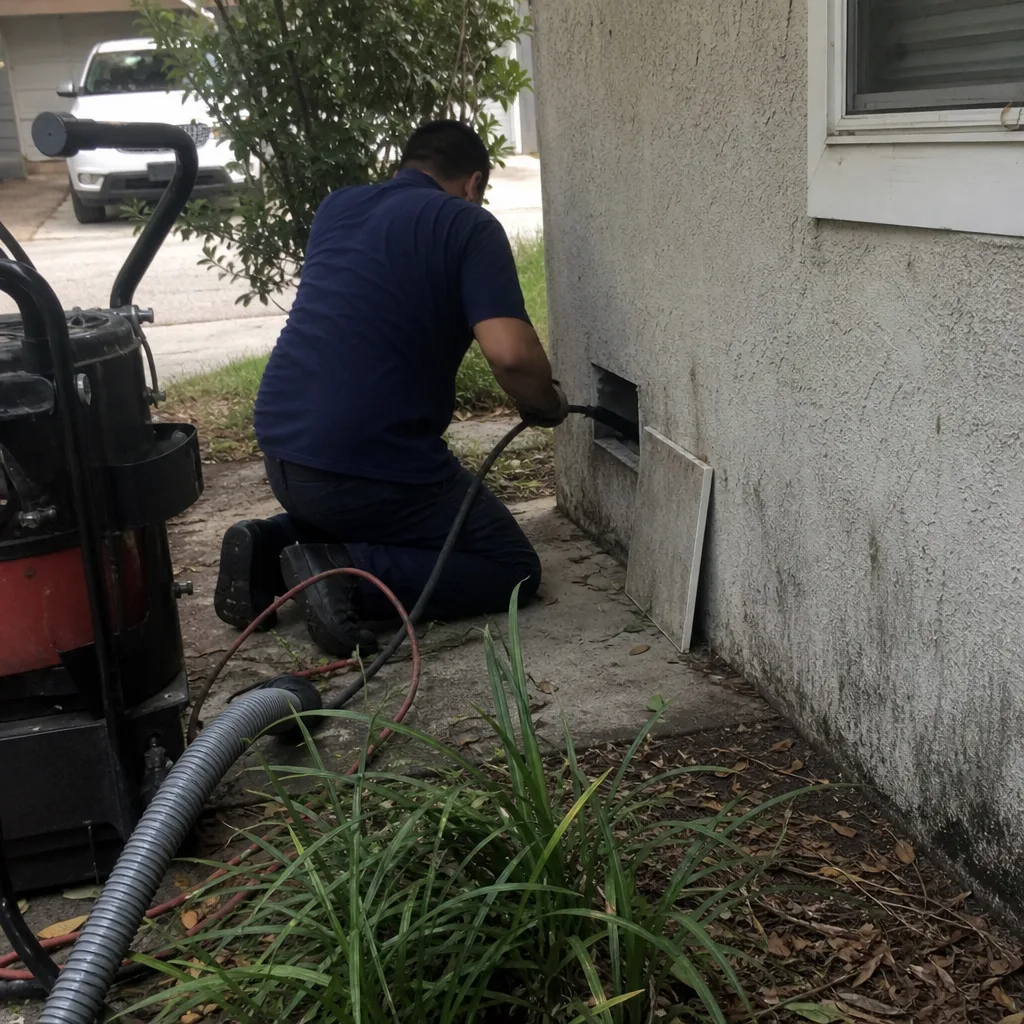 Before
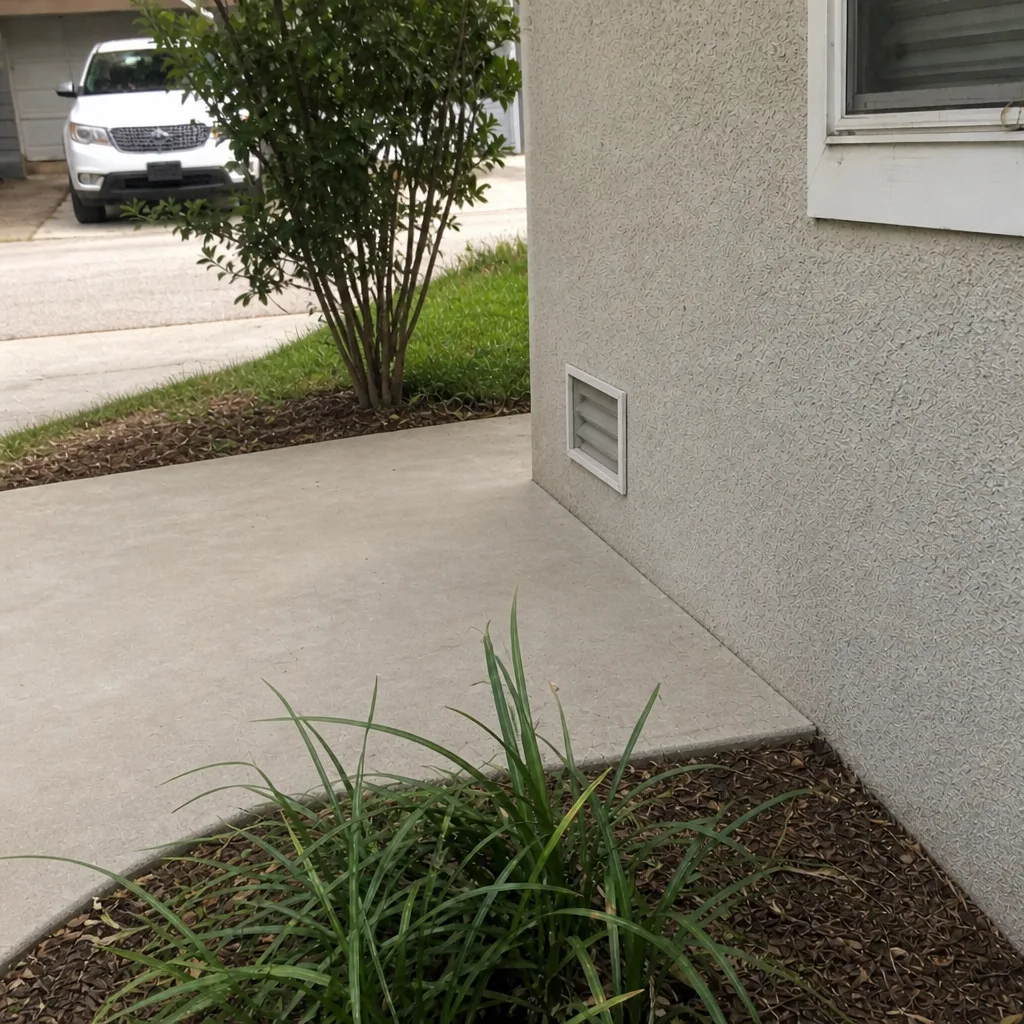 After
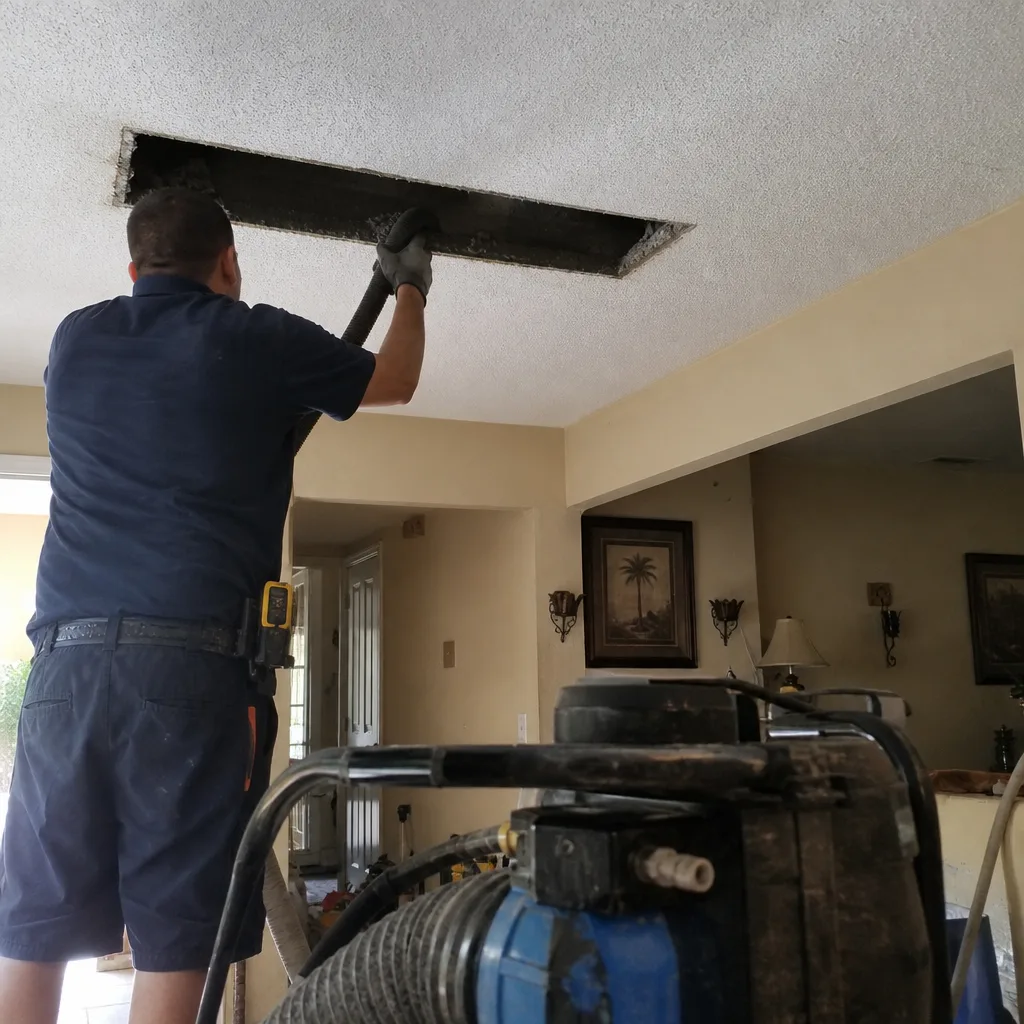 Before
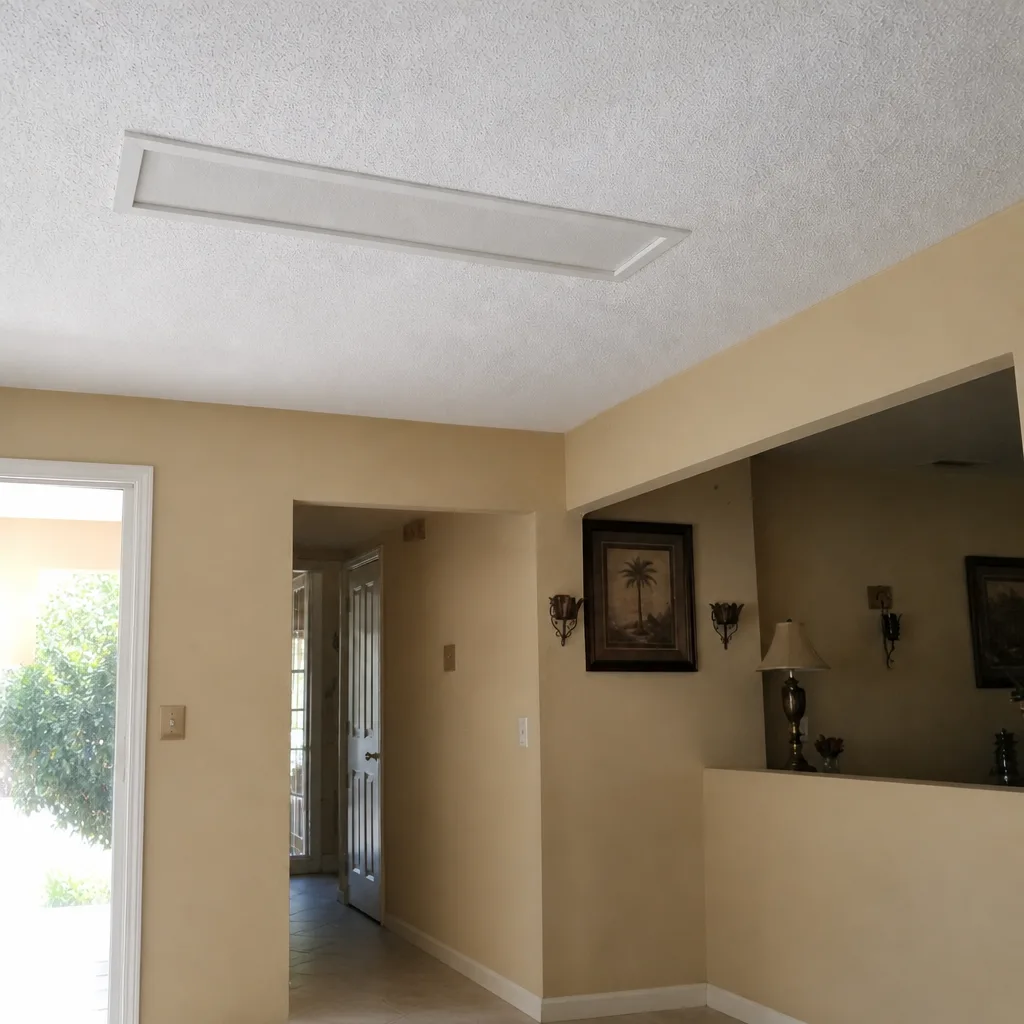 After
When to Call a Professional
Call a professional when any of these apply: you’ve just finished a renovation, there’s visible mold or musty odor inside the ducts, you have a flex duct system, it’s been more than 5 years since the system was cleaned, or you see a disconnected or crushed run. Any of those situations moves you out of DIY scope and into full-system cleaning with negative pressure and containment. We bring contractor-grade equipment, and we can also identify and fix duct breaches rather than cleaning around them.
If your dryer vent hasn’t been cleaned in a couple of years, that’s a separate safety call worth making at the same time. Duct Cleaning Brandon offers free estimates in Brandon. Call (844) 834-1263. We answer 24/7. Fast dispatch from 7am to 7pm, Sunday through Friday.
Frequently Asked Questions
You can clean register faces and the first accessible foot of a duct with a shop vac, and that’s worth doing. You cannot put a whole duct system under the negative pressure required to capture loosened debris across all branch lines, so shop vac work should stay at the register level and never extend into the trunks, returns, or flex runs.
Air duct cleaning in Brandon typically costs around $300 to $600 for a standard single-system home, with larger homes, multiple systems, or a first-ever deep clean running higher. The written estimate sets the final price. Call (844) 834-1263 for an exact quote, estimates are free.
Because they’re usually not the same service. A low number typically means a registration-level pass with consumer-grade equipment rather than full-system cleaning with contractor-grade collection and sustained negative pressure. Ask any company what collection equipment and containment they’ll use and whether they’ll show you before-and-after photos of your own ducts. Call (844) 834-1263 for an exact quote on the full job, estimates are free.
For most Brandon homes, every 3 to 5 years is a reasonable cycle, and sooner after renovation, water intrusion, a move-in, or any system that’s been sitting unserviced for 5+ years. Homes with pets or allergy concerns often benefit from the shorter end of that range. Call (844) 834-1263 to talk through your specific system, estimates are free.
Ask for before-and-after photos of your own ductwork and confirm negative pressure is held throughout the cleaning. We provide before-and-after photos of your ducts as part of the service. If a company won’t show you the inside of your ducts before and after, the work isn’t verifiable. Call (844) 834-1263 with any process questions, estimates are free.
Sometimes, if the smell originates from moisture and biological growth inside the ductwork, and if the underlying moisture source is also addressed. Duct cleaning alone won’t fix an active leak, sweating uninsulated run, or overflow pan issue. That has to be found and corrected. Call (844) 834-1263 and we can talk through what your situation likely needs.
The Bottom Line
DIY air duct cleaning is not wrong, it’s just narrow. Register and grille cleaning, filter maintenance, and a flashlight look down accessible runs are legitimate homeowner work, and doing them well extends the time between professional visits. Everything past that surface layer requires negative pressure sustained across the full system, contractor-grade collection equipment, and containment, and those aren’t things consumer equipment provides. In Brandon’s humid climate, the systems that most need professional cleaning are exactly the ones where DIY is most likely to go wrong: post-renovation, mold-suspect, flex, and long-deferred. The hybrid cycle – DIY at the register level, professional at the source – is the sensible answer.
When you’re ready for the full-system version, call (844) 834-1263 for a free estimate. We use Rotobrush and Nikro systems and Abatement Technologies containment, we fix the breaches we find, and we hand you before-and-after photos so you know exactly what was done. One flat price per system, agreed before work starts. We answer 24/7, with fast dispatch from 7am to 7pm, Sunday through Friday.
Written by the team at Duct Cleaning Brandon.